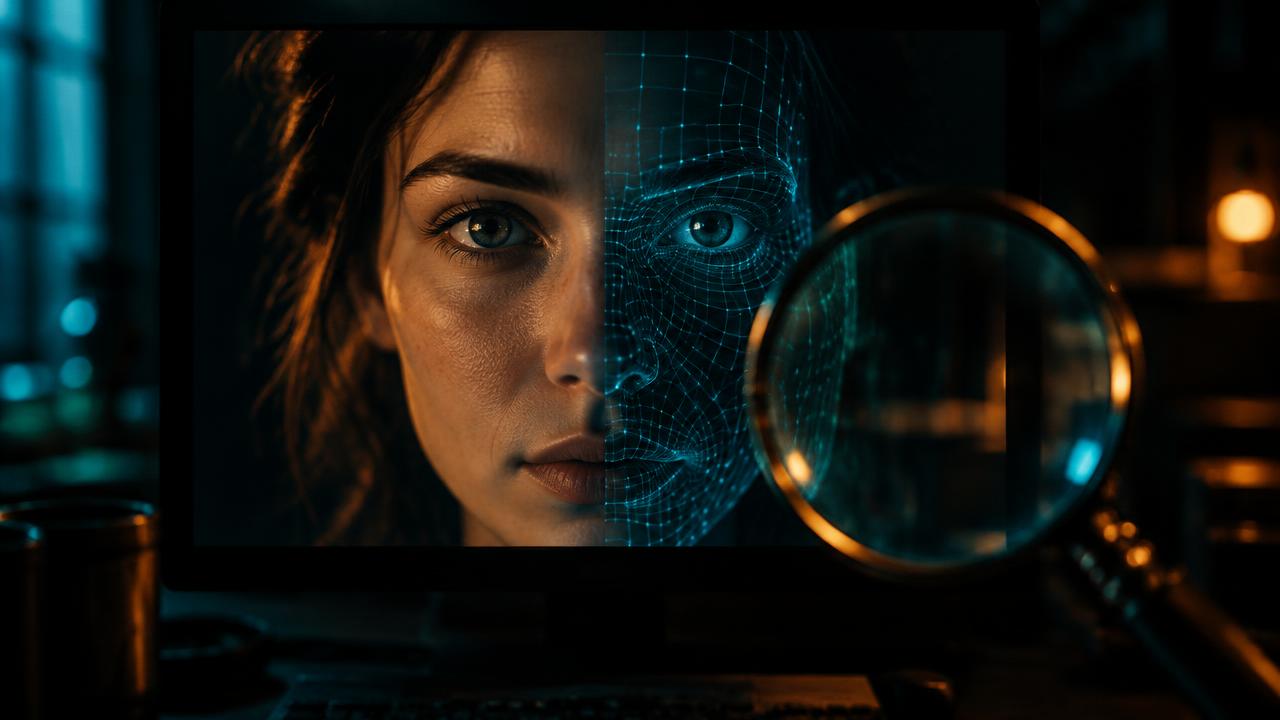
What counts as a deepfake?
A deepfake is video, audio or an image created or altered with AI to show someone saying or doing something they never did. The term originally meant face-swapped videos, but it now covers fully AI-generated photos, lip-synced videos and cloned voices. Some are harmless satire. Others are used for fraud, harassment, political manipulation and non-consensual intimate imagery.
The bad news: the classic tell-tale signs — people who never blink, six-fingered hands, garbled text — are disappearing as tools improve. The good news: fakes still have to come from somewhere, and checking that is often easier than analysing the content itself.
Part 1: Check the context (works on everything)
1. Ask who posted it first
Trace the clip back to its earliest version. Is the original poster a real, established account, or a brand-new profile with no history? Screenshots of screenshots, cropped watermarks and “saw this on another app” posts are red flags.
2. Read sideways, not down
Fact-checkers call it lateral reading: instead of scrutinising the post, open new tabs and search for the event. If a famous person really said something shocking, major news organisations will be reporting it. If only the viral post and its copies exist, be suspicious.
3. Run a reverse image search
Upload the image, or a screenshot of a key video frame, to Google Lens, Bing Visual Search or TinEye. Fakes are frequently built from real photos, and finding the untouched original — with a different face, background or caption — settles the question quickly.
4. Look for content credentials
A growing number of cameras, editing apps and AI generators attach Content Credentials, based on the C2PA standard, recording how a file was made and edited. You can inspect them with free online verification tools. Treat this as a bonus clue: credentials showing an AI tool are strong evidence, but missing credentials prove nothing, because most platforms strip metadata on upload.
5. Notice how it makes you feel
Fakes are designed to spread, and outrage, fear and urgency spread fastest. If a clip makes you want to share it *immediately*, that is the moment to slow down.
Part 2: Check the content (photos and video)
6. Hands, teeth, ears and jewellery
AI still struggles with small, complicated details. Look for fingers that merge or bend wrongly, teeth that blur into one band, earrings that don’t match, glasses whose arms vanish into hair, and ears with odd shapes.
7. Text, logos and backgrounds
Zoom in on signs, labels, clothing logos and documents. Melted letters and nonsense words are a strong sign of a generated image. In the background, check for warped lines, doorways that bend, repeated faces in crowds, or objects that blend into one another.
8. Lighting, skin and edges
Does the light on the face match the light in the room? Do shadows fall in the same direction? Overly smooth, poreless skin, a face that looks sharper or softer than the neck, and shimmering edges around the hairline or jaw — especially when the head turns — are typical of face swaps.
9. Mouth and voice sync
In lip-synced fakes, watch the mouth on sounds like “b”, “m” and “p”, where lips should close fully. Mismatches, a mouth that looks pasted on, or a static body with only the mouth moving are giveaways. Slowing the video to 0.25× speed makes these much easier to see.
Part 3: Check the voice
10. Treat urgent calls with healthy suspicion
Voice cloning now needs only a short sample — sometimes a few seconds from a social media video. Scammers use it to impersonate relatives in trouble or executives requesting urgent transfers. The US Federal Trade Commission has warned consumers about exactly this kind of family-emergency scam. Listen for flat emotion, odd breathing or pacing, and refusal to answer personal questions — but don’t rely on your ears.
Do deepfake detection tools work?
Detection tools can flag likely fakes, and they are useful for journalists and platforms handling large volumes. But they produce false positives and false negatives, they can be fooled by compression and re-recording, and they lag behind the newest generators. Treat a detector’s score as one clue among several — never as a verdict.
What to do if you find a deepfake
- Don’t share it — not even to debunk it, which can spread it further. Share a fact-check instead.
- Report it to the platform using its impersonation, manipulated-media or harassment option.
- If it targets you, take screenshots and note links and dates before it is removed, then report it to the platform and, where it involves threats, extortion or intimate images, to the police.
- If money was involved, contact your bank immediately and report the fraud to the relevant authority in your country.
Helping less tech-savvy relatives recognise these scams is one of the most useful things you can do. Our guide on how to explain AI to older relatives includes a simple way to start that conversation.